
Spices
Spices
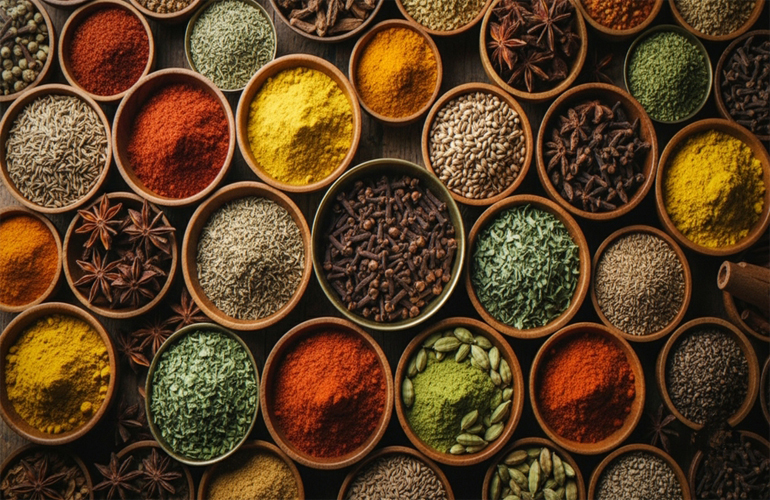
Spices are aromatic plant-derived substances used primarily to flavor, color, and preserve food, and they have played a crucial role in human history, trade, and culture for thousands of years. They are obtained from various parts of plants such as seeds (like cumin), bark (cinnamon), roots (ginger), buds (cloves), and stigmas (saffron), and are distinct from herbs, which usually come from the leafy parts of plants. Historically, spices were so valuable that they drove exploration and global trade routes, most notably during the Spice Trade, which connected regions like India, Southeast Asia, the Middle East, and Europe. Spices not only enhance taste and aroma but also have medicinal and preservative properties; for example, turmeric contains curcumin with anti-inflammatory benefits, while cloves have antimicrobial effects.
Many spices are rich in antioxidants, vitamins, and essential oils that contribute to health and well-being. In culinary traditions around the world—especially in Indian cuisine—spices are often blended into complex mixtures like garam masala, creating layered flavors that define regional dishes. Additionally, spices have been used in religious rituals, perfumes, and traditional medicine systems such as Ayurveda. Today, spices remain an essential part of global cuisine and commerce, valued for both their sensory qualities and their potential health benefits.

Send An Enquiry